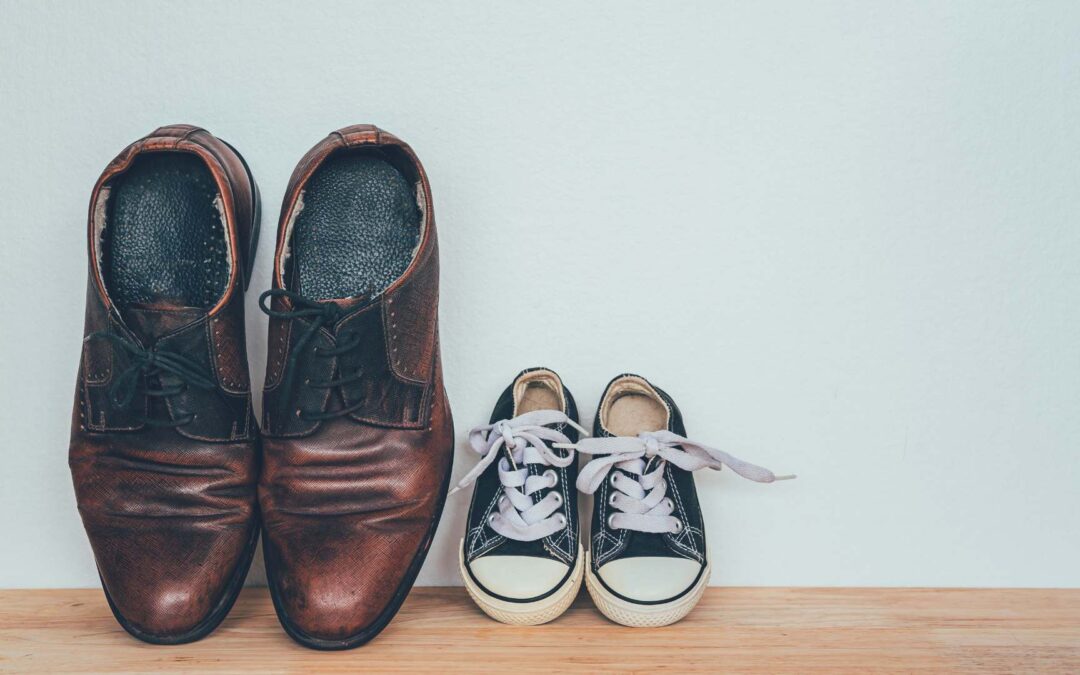
Father’s Day grief is real — and it’s more common than the barbecue posts and greeting card aisles would have you believe.
The cultural script around this holiday assumes one thing: that you have a dad worth celebrating, and that you want to celebrate him. For a lot of people, neither of those things is simple. Some are grieving a father who has died. Some are carrying the weight of an estranged or painful relationship. Some grew up with a dad who was physically present but emotionally somewhere else entirely.
If any of that is you, this post is for you. Not to rush you toward resolution. Not to tell you how to feel. Just to say: what you’re carrying this weekend makes complete sense, and you are not alone in carrying it.
Why Father’s Day Is Hard for More People Than You Think
Father’s Day grief and complicated feelings around this holiday are far more widespread than our culture tends to acknowledge. As Psychology Today noted recently, for many people this day brings up “the long, quiet grief of a relationship that never became what you needed it to be.” That grief is real whether a father is living or not, present or absent, someone you’ve chosen distance from or someone you’re still trying to love from a safe place.
In my work as a therapist, complicated feelings around Father’s Day come up often — and across a wide range of experiences. You don’t have to have had a terrible father to find this weekend hard. Sometimes the grief is quiet and hard to name. That doesn’t make it any less real.
The Many Shapes of Father’s Day Grief
There is no single story here. Father’s Day grief and complicated feelings on this day show up differently for different people. Here are some of the most common experiences I hear about:
When your father has died
Grief does not follow a calendar, but holidays have a way of catching people off guard anyway. The first Father’s Day without him can be devastating. And for many people, the tenth catches them just as off guard. Anniversary grief — waves of feeling that return around significant dates — is a well-documented and completely normal response, even years or decades later.
For those whose relationship with their father was difficult or painful, death can bring a particular kind of grief: the grief of a door that is now permanently closed. Conversations that will never happen. That loss is real, and it deserves space.
When you are estranged from your father
Estrangement often brings its own specific grief that people on the outside rarely understand. It is not just the loss of a person — for many, it is the loss of who they needed that person to be. The relationship they deserved and did not get.
On top of that grief, estranged adult children often encounter pressure from friends and family to reconcile, rather than acknowledgment of what the distance has cost them. Research on family estrangement consistently shows that estranged people feel isolated and stigmatized, often receiving judgment rather than support. That pressure is its own kind of pain on top of the grief.
When he was there but not really there
This one is often the hardest to name. He was present. He provided. He showed up. And yet there is this hollow place where something important was missing.
Family therapist Pauline Boss developed the concept of ambiguous loss to describe the grief of a relationship where someone is physically present but emotionally absent. It is one of the more disorienting forms of grief, in part because it is so hard to justify to others — and sometimes even to oneself.
When the relationship involved harm
If a father’s presence included abuse, neglect, addiction, or other harm, Father’s Day can surface a tangle of feelings that do not resolve neatly. Anger. Relief. Grief for the father a person deserved and did not have. For many survivors, the confusion about whether they are “allowed” to feel sad about someone who hurt them is itself a source of pain.
All of those feelings can coexist. For many people in this situation, they do.
What You Might Be Feeling on Father’s Day — And Why It Makes Sense
Whatever you are carrying into this weekend, the following feelings are all understandable responses to complicated or painful paternal relationships. None of them make someone a bad person, and none of them need to be explained or justified to anyone.
- Grief — for the father a person had, or for the one they didn’t
- Anger — for what was done, or for what was withheld
- Relief — particularly for those for whom distance or death has brought safety
- Guilt — for feeling relieved, or for not feeling sad in the “right” way
- Numbness — which is often its own form of emotional protection
- Longing — for a version of the relationship that existed, or one that never did
- Nothing at all — and feeling unsettled by that absence of feeling
As grief educator Heather Stang writes: people have permission to feel whatever they feel about their father. Grief is not linear, it does not resolve on a schedule, and it does not require death to be real.
How to Get Through Father’s Day When It Is Hard
There is no single right way to navigate a hard Father’s Day. What helps varies from person to person. These are some approaches that many people find supportive:
Give yourself permission to opt out
It is completely okay to not post anything, not call, not attend gatherings that feel unsafe or draining. Social media will be full of celebrations that may feel painful to scroll through. Stepping away from that is a reasonable and self-protective choice, not a failure.
Name what you are actually grieving
Grief can feel more manageable when it has a specific shape. It may help to try finishing a sentence like: “I’m not just sad about ___. I’m also grieving ___.” The missing relationship. The apology that never came. The version of a father that was needed and not provided. Getting specific often makes the grief feel less like a fog and more like something that can be sat with.
Find one person who gets it
Not everyone needs to understand. Finding one person who can sit with the complexity — without pressure to reconcile, without suggestions that it’s “not too late” — can make a significant difference on a hard day.
Create your own meaning for the day
People get to decide what this day means to them. That might look like writing a letter that will never be sent. Spending time somewhere meaningful. Quietly acknowledging the day and then doing something that feels nourishing. The greeting card industry does not get a vote in how anyone spends this Sunday.
On the Pressure to Reconcile
For those with a living but estranged or difficult father, the pressure around Father’s Day can be significant. “Life is short.” “You’ll regret it.” “He’s still your dad.”
These comments, however well-intentioned, often do not account for the full picture. The decision about whether and how to be in contact with a parent is deeply personal, and it belongs to the individual — not to a holiday, a social expectation, or outside pressure.
|
Choosing distance from someone who caused harm is a personal decision that each person has the right to make for themselves. There is no timeline that applies to everyone, and there is no single right answer. |
The Lasting Impact of a Difficult Father Relationship
The term “paternal wound” — sometimes used in therapeutic contexts to describe the lasting impact of an absent, harmful, or emotionally unavailable father — points to something many people recognize in themselves: that the relationship with a father, or the absence of one, does not stay in childhood.
It often shows up later in how a person trusts others, what they believe they deserve, the relationships they choose, and the limits they find difficult to set. This is not a personal failing — it is a predictable outcome of formative experiences. And it is something that can be explored and worked with over time.
When to Reach Out for Support
If Father’s Day brings up feelings that are disrupting sleep, relationships, or daily functioning — or if old grief keeps returning without any sense of resolution — that may be worth exploring with a professional.
Grief related to complicated family relationships, estrangement, and paternal loss is some of the most common work in therapy, and it is also some of the most meaningful. If it would help to talk, I offer a free 20-minute virtual consultation for anyone in Washington or Oregon.
Book a free consultation here — no commitment, no pressure. Just a conversation.
If people pleasing has been part of how you have managed difficult family dynamics — keeping the peace, saying yes when you meant no — my post on how to stop people pleasing may also resonate.
Common Questions About Father’s Day Grief
Is it normal to feel grief on Father’s Day even if my dad is still alive?
For many people, yes. Grief does not require death. It is possible to grieve a relationship that is absent, distant, or painful while the person is still living. This is sometimes called ambiguous loss — and it is a well-recognized experience in the grief and mental health field.
How do I handle people asking why I’m not celebrating Father’s Day?
“I have complicated feelings about this day” is a complete response. So is “I’d rather not get into it.” People are not owed an explanation for how they navigate a holiday that carries pain for them.
I feel relieved my father is gone. Is that normal?
Relief is a recognized and documented grief response, particularly in cases where a relationship involved harm, fear, or chronic stress. For many people, relief and grief coexist. Feeling relieved does not mean a person did not love their father — it often means the relationship was complicated in ways that others may not fully understand.
How do I stop feeling guilty about being estranged from my father?
Guilt is a very common companion to estrangement. It is worth noting that guilt is not always evidence of wrongdoing — sometimes it reflects the way a person was taught to prioritize someone else’s needs over their own wellbeing. This is something that can be worth exploring in therapy, where there is space to separate what the guilt is actually telling you from what it was taught to tell you.
Is it okay to skip Father’s Day entirely?
Yes. Opting out of a holiday that causes pain is a reasonable choice. There is no obligation to participate in a cultural occasion that does not reflect someone’s actual experience.
|
If you need support right now 988 Suicide & Crisis Lifeline: Call or text 988 (available 24/7) Crisis Text Line: Text HOME to 741741 SAMHSA National Helpline: 1-800-662-4357 (free, confidential, 24/7) |
|
Disclaimer This blog post is for informational and educational purposes only. It is not intended to be a substitute for professional mental health advice, diagnosis, or treatment. Always seek the guidance of a qualified mental health provider with any questions you may have regarding a mental health condition. |